

DME revenue cycle management, done right
DME revenue cycle management is the end-to-end billing and back-office process for durable medical equipment suppliers: order intake, documentation, coding, claims, denials, and collections. NextRCM brings deep DME expertise: we build workflows around the documentation and compliance rules that decide whether a DME claim gets paid.
DME billing requires more than claim submission.
It is documentation, coverage rules, and the right codes: SWO and proof of delivery, capped rental, HCPCS and modifiers, prior authorization, and denials worked at the root. We run all of it, not just the claim.

What we run, end to end
The denials DME suppliers hit most
These are the denial reasons we see again and again in DME. Here is what trips each one up, and how we keep your claims clean.
“The claim was denied because the standard written order was missing or incomplete.”
We verify the SWO and supporting documentation before the claim goes out, so it is not rejected on intake.
“Revenue kept leaking on rentals from the wrong modifiers, like KX and RR.”
We apply the right DME modifiers and track capped-rental months so every month bills clean.
“The payer said medical necessity was not supported by the documentation.”
We check documentation against the payer's coverage policy before submission, and appeal with the right evidence when it is warranted.
“The claim was held because proof of delivery was not on file.”
We confirm proof of delivery is documented so claims are not delayed or clawed back.
“Prior authorization delays kept stalling equipment and the claims behind it.”
We manage prior authorization end to end so equipment ships and claims are not denied for auth.
“Aging claims slipped past the timely-filing window and were written off.”
We work AR by payer and deadline so earned revenue is not lost to the clock.
Industry insights worth knowing
What we see move the numbers in DME billing, in plain terms.
Documentation Wins Medical Necessity
For DME suppliers, payment hinges on proof of medical necessity, so a complete physician order, a signed face-to-face note, and valid proof of delivery decide whether a claim is paid far more than the device code itself does.
Front-End Gaps Drive Denials
Most DME denials trace back to eligibility, prior authorization, and order-detail errors that exist before the equipment ever ships, which means fixing intake and verification up front prevents far more lost revenue than chasing appeals later.
Clean Claims Beat Costly Rework
A DME claim that goes out right the first time costs only a fraction of one that has to be reworked, resubmitted, and appealed, so disciplined coverage checks and documentation review protect margin and cash flow on low-dollar, high-volume items.
Why DME billing is different
Most billing partners treat DME like any other claim. But DME has its own rulebook: a written order before dispensing, proof that the item reached the patient, capped-rental timelines, the right HCPCS code and modifiers, and medical-necessity documentation that matches payer policy. Miss any one of them and the claim is denied. Our processes are designed around exactly these requirements, so revenue isn't lost to avoidable paperwork gaps.
The DME rulebook
- Standard Written Order (SWO)
- Proof of Delivery (POD)
- Capped-Rental Tracking
- HCPCS & Modifiers
- Medical Necessity
- LCD / NCD Alignment
Miss any one of these and the claim is denied. We build them into every step.
How a DME claim flows
Every DME claim runs the same path, and the documentation that drives DME payment is built into each step, not bolted on at the end.
- 01
Order intake & SWO
It starts with a complete Standard Written Order, the right item, the ordering practitioner, signature, and date, confirmed before anything ships.
- 02
Eligibility & prior auth
We verify coverage and secure any required prior authorization up front, so the claim isn't lost to something that could have been checked on day one.
- 03
Coding & medical necessity
Correct HCPCS codes and modifiers are applied, and the clinical notes are mapped to the item's LCD/NCD coverage criteria so medical necessity holds up.
- 04
Proof of delivery
Delivery is evidenced and matched to the billed item, quantity, and date of service, the element payers most often find misaligned.
- 05
Submission & payment posting
The clean claim goes out, payments are posted accurately, and capped-rental timelines are tracked so nothing quietly slips.
- 06
AR follow-up & prevention
Aging and denials are worked by value and root cause, and what caused a denial is fed back to the front end so the same claim doesn't fail twice.
What is DME? A beginner's guide
A plain-language walkthrough of durable medical equipment, DME billing, and how the revenue cycle works, from our team.
DME categories we support

Respiratory & Sleep
CPAP, BiPAP, oxygen, nebulizers, and related supplies, including compliance and resupply workflows.

Mobility
Manual and power wheelchairs, scooters, walkers, and mobility assist devices.
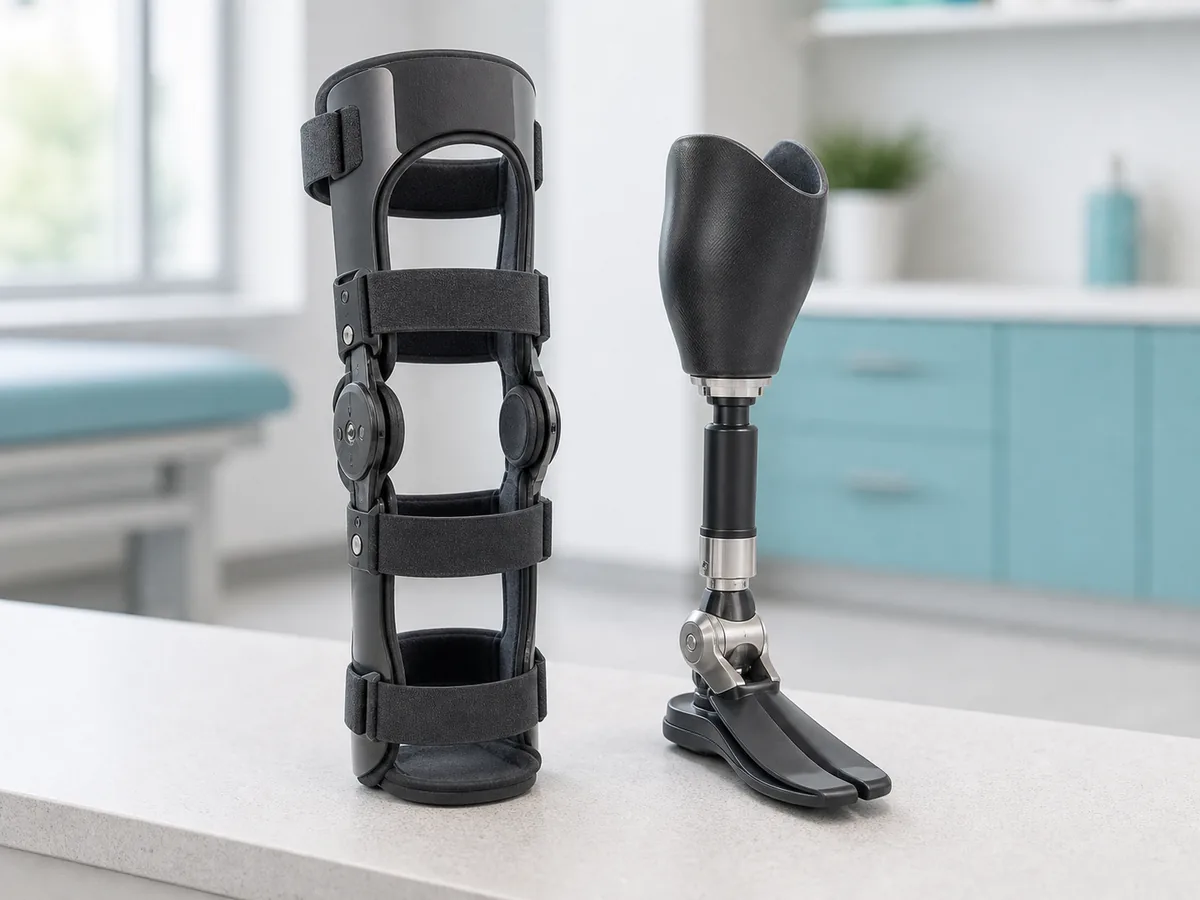
Orthotics & Prosthetics
O&P billing with the detailed documentation these claims require.

Wound Care
Surgical dressings and wound-care supplies with medical-necessity support.

Incontinence & Urological
High-volume supply billing with accurate quantities and modifiers.

And more
Diabetic supplies, enteral nutrition, and other durable and disposable categories.
DME compliance, built into every claim
These are the requirements where DME revenue is most often won or lost. We handle them as a standard part of the workflow.
Compliance at a glance
- Standard Written Order (SWO)
- Proof of Delivery (POD)
- Capped-Rental Tracking
- HCPCS & Modifiers
- Medical Necessity
- LCD / NCD Alignment
Standard Written Order (SWO)
The order a supplier needs before billing: item, quantity, ordering provider, and date, complete and on file before the claim.
Proof of Delivery (POD)
Documented evidence the item reached the patient, in the format payers require.
Capped-Rental Tracking
Correct rental-month sequencing and modifiers so capped-rental items are billed accurately over time.
HCPCS & Modifiers
The right Level II codes and modifiers, the detail that separates a clean claim from a denial.
Medical Necessity
Documentation aligned to payer policy so necessity is supported, not assumed.
LCD / NCD Alignment
Claims checked against Local and National Coverage Determinations before submission.
Denial reduction tuned to DME
Because we know the DME denial reasons (missing SWO or POD, wrong modifier, medical-necessity gaps, capped-rental errors) we fix them at the root and prevent repeats, instead of resubmitting the same claim the same way.
Illustrative. Results vary by practice size, payer mix, and specialty.
Try the denial-cost estimatorExplore further
The services and the audience behind our DME work.
DME revenue cycle questions
DME revenue cycle management is the full billing and back-office process for durable medical equipment suppliers, from order intake and documentation (SWO and proof of delivery) through coding (HCPCS and modifiers), claim submission, denial management, and collections. NextRCM manages it with deep DME expertise, as part of full-service RCM.
Put deep DME expertise behind your revenue
Get a consultation and we'll review where your DME claims are leaking and how a dedicated DME-specialist team can help.